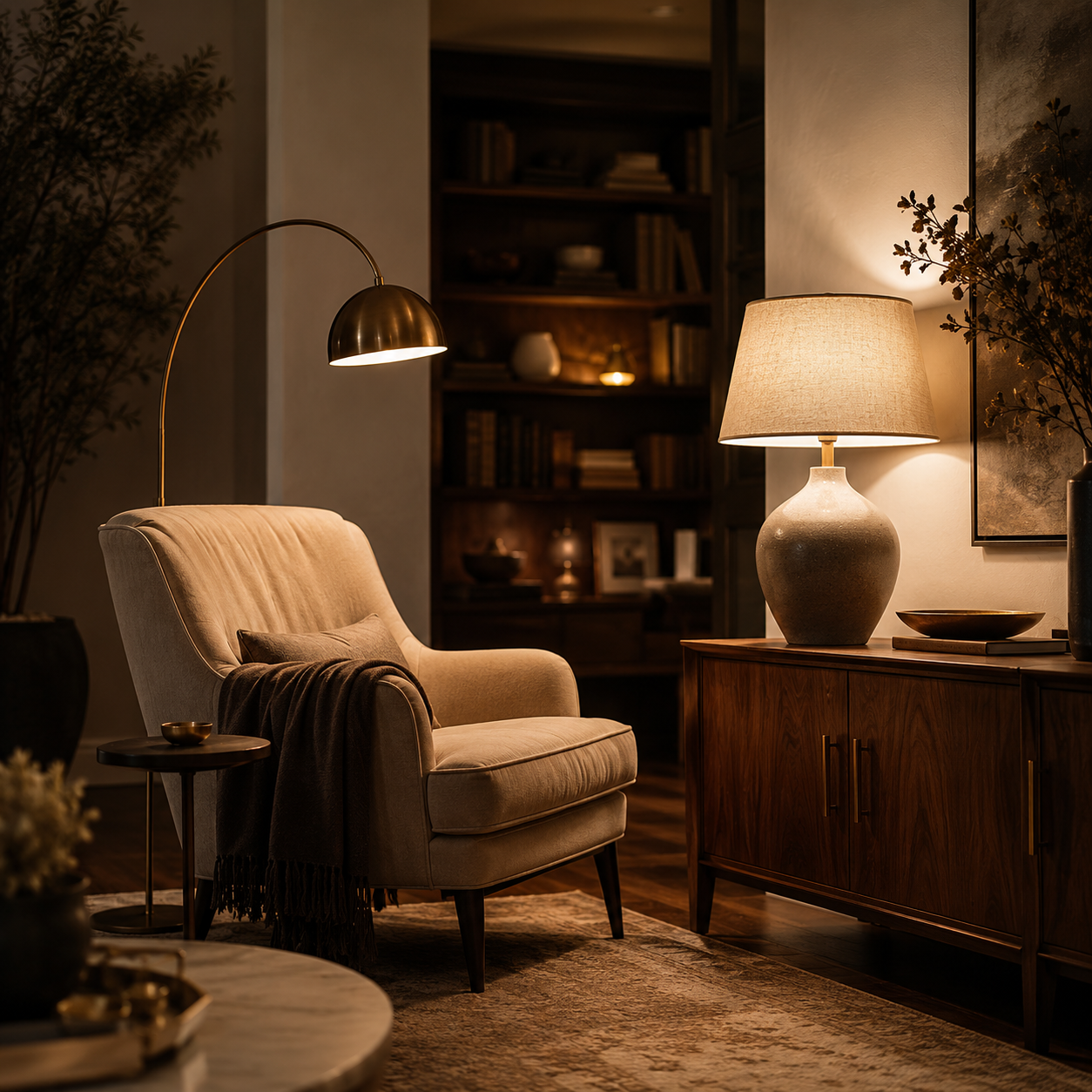

Article: How to Choose the Perfect Table Lamp
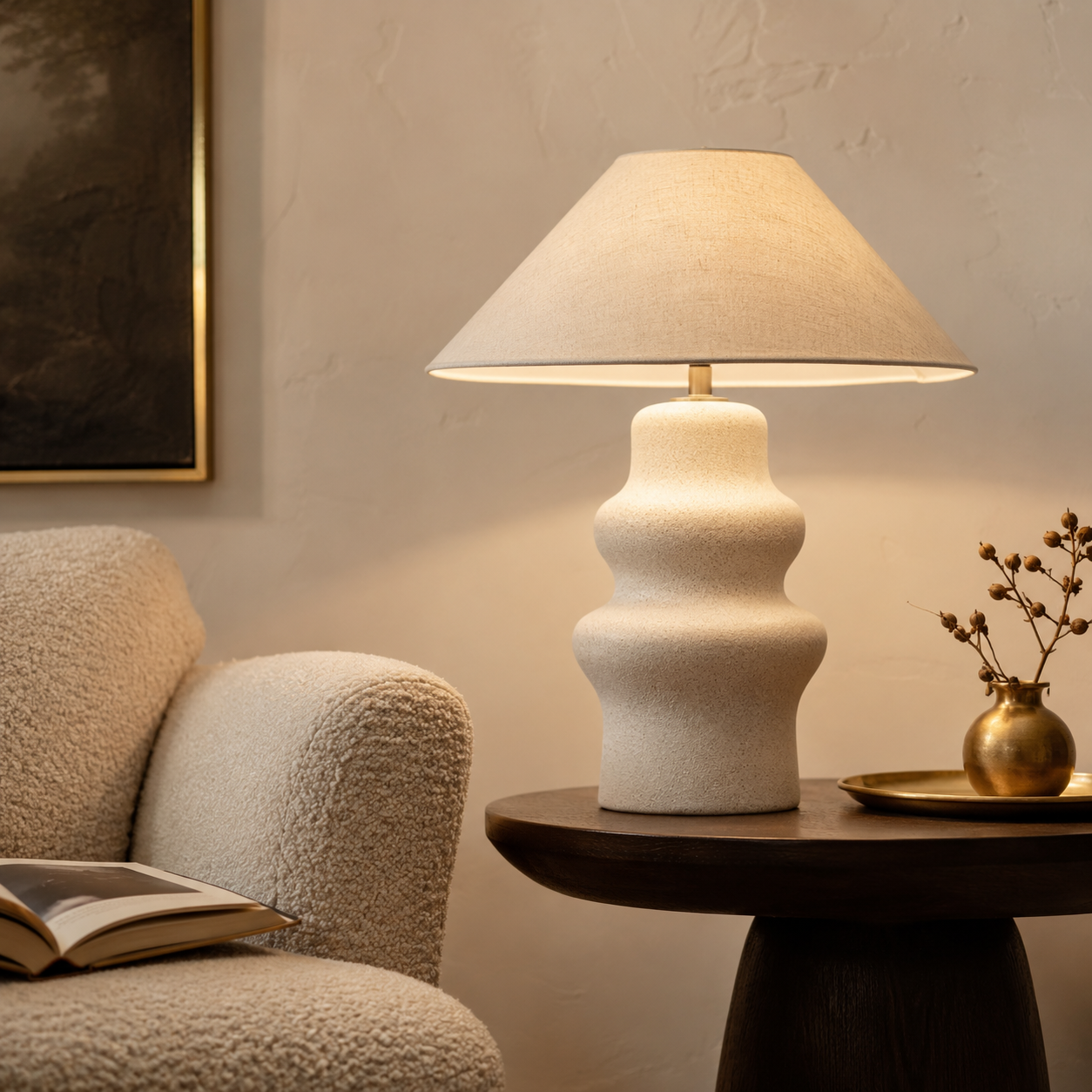
How to Choose the Perfect Table Lamp
The right table lamp does more than light a room it shapes it. It softens hard corners, draws the eye to the pieces you love, and turns an ordinary evening into something quieter and warmer. Yet most of us buy lamps on looks alone, only to find the scale is wrong, the light is harsh, or the shade throws shadows in all the wrong places. This guide walks you through the details that matter, so the lamp you choose feels like it was always meant to be there.
Start With Scale, Not Style
Before you fall for a silhouette, measure the surface it will sit on. As a general rule, a table lamp should be roughly one and a half times the height of the furniture beneath it, and the shade should never be wider than the table itself. On a bedside table, aim for the bottom of the shade to sit at about eye level when you are propped up in bed this keeps the bulb out of your sightline while still lighting the page of your book.
In living rooms, larger lamps earn their place. A console or side table can carry a taller base with a generous shade, filling the vertical space between furniture and wall. Small lamps on large surfaces tend to look lost; when in doubt, size up.
Match the Shade to the Job
The shade determines where the light actually goes. A wide, open drum shade spreads light broadly in both directions ideal for general living room glow. A tapered empire shade directs more light downwards, which suits reading corners and desks. Opaque or dark shades create pools of focused light and dramatic contrast, while pale linen and fabric shades diffuse light softly across the whole room.
Think about what the lamp is for. Reading in bed calls for directed, downward light. Setting a mood in the sitting room calls for soft, diffused warmth. One lamp rarely does both jobs perfectly, which is exactly why well lit rooms layer several sources rather than relying on one.
Choose the Right Light Colour
The bulb matters as much as the lamp. For living spaces and bedrooms, warm white light — typically around 2700K — flatters skin tones, wood and soft furnishings, and helps the body wind down in the evening. Cooler tones belong in workspaces, where clarity matters more than atmosphere. If your lamp takes a standard bulb, this is an easy detail to control; simply check the colour temperature on the bulb packaging before you buy.
Placement Is Half the Design
A lamp placed well changes how a whole room reads. Position table lamps in the corners of a living room to push light outwards and make the space feel larger. In hallways and on sideboards, a single lamp left on in the evening creates a welcome that overhead lighting simply cannot. In bedrooms, matching lamps either side of the bed bring symmetry and calm though a deliberately mismatched pair, unified by colour or material, can feel more collected and personal.
A Lamp Should Earn Its Place
The best table lamps work twice: as light sources after dark and as sculptural objects during the day. Choose materials and finishes that hold their own when the lamp is switched off a ceramic base with real texture, a metal finish that catches daylight, a shade with genuine structure. A lamp you love unlit is a lamp you will never tire of.
Light is the fastest way to change how a home feels. Get the table lamps right, and everything else in the room looks better for it.