
Layered Lighting Ambient Task Accent Guide
Walk into a room that feels instantly calm and expensive, and the secret is rarely the furniture. It is the lighting or more precisely, the layers of it. Beautifully lit rooms are never lit by a single source. They combine several types of light, each doing a different job, so the room can shift from bright and practical to soft and atmospheric at the turn of a switch. Interior designers call this layered lighting, and once you understand the three layers, you can build it into any room in the house.
Layer One: Ambient Light
Ambient light is the foundation the general illumination that lets you move around a room safely and comfortably. Ceiling fixtures, pendants and large floor lamps typically provide it. The mistake most homes make is stopping here: one bright overhead light, switched on at full strength, flattening every texture and shadow in the room.
Ambient light works best when it is generous but gentle. A floor lamp bouncing light off a pale wall, or a pendant on a dimmer, gives you the base layer without the glare. Think of it as the canvas the other layers are painted onto.
Layer Two: Task Light
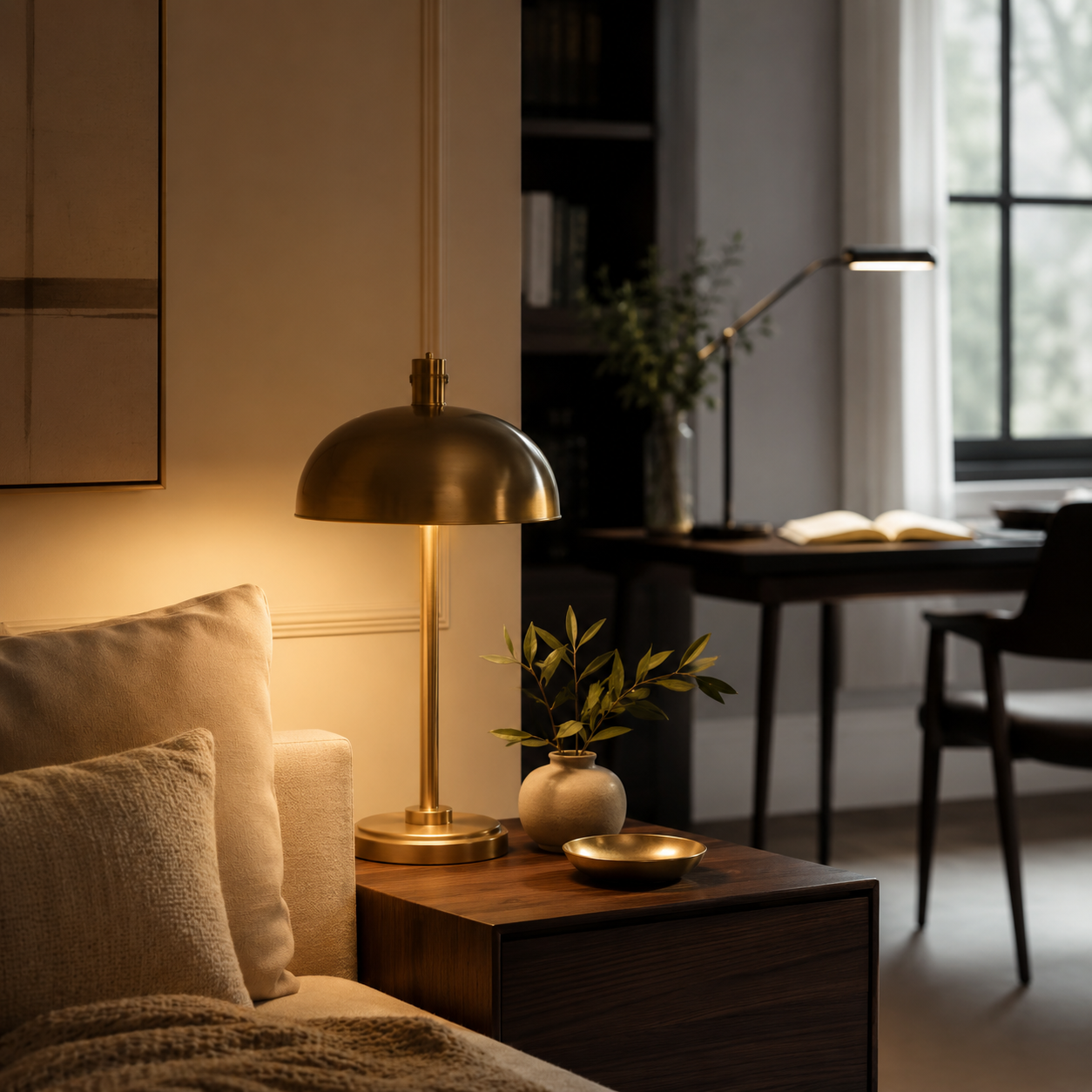
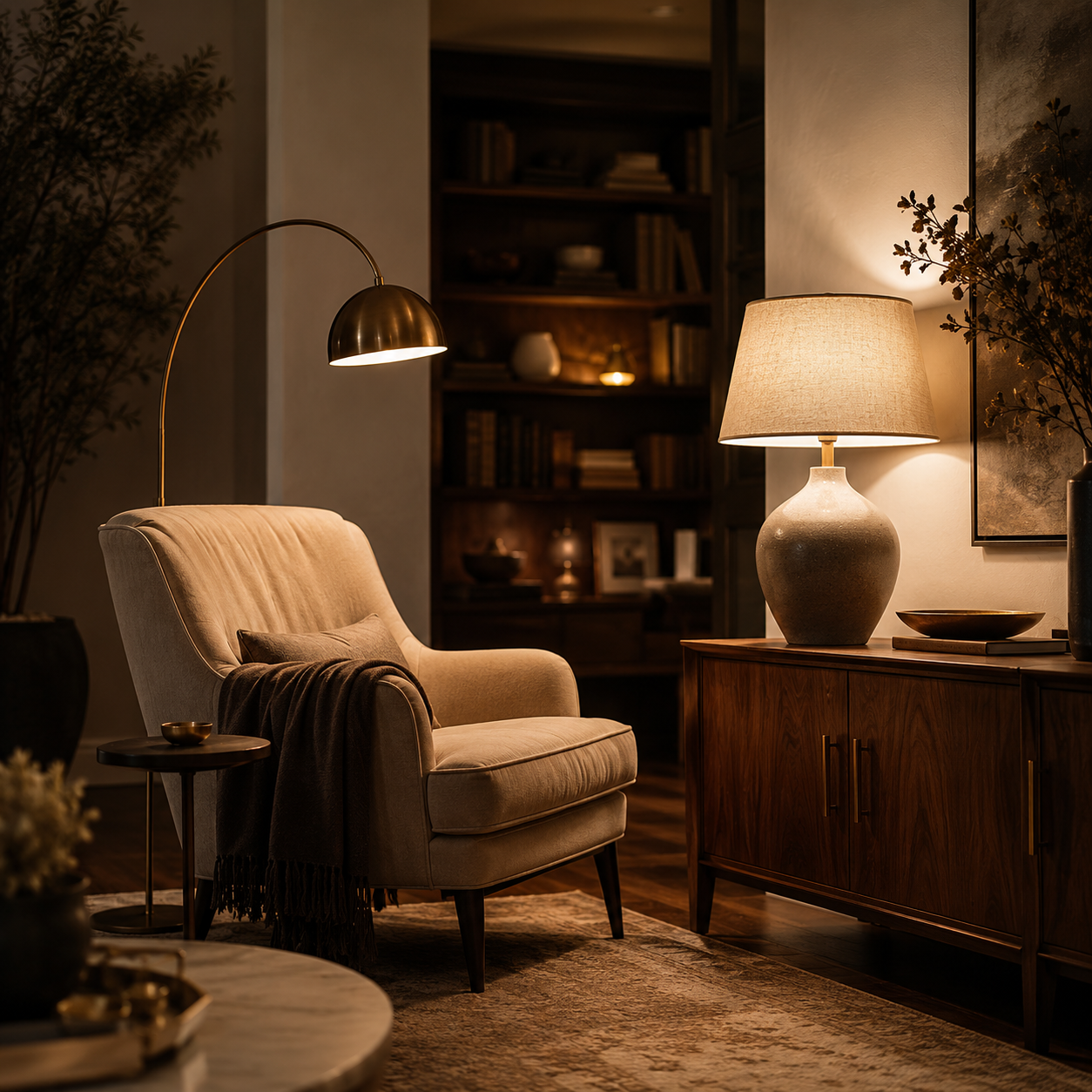
Task lighting is focused light for doing things reading, working, cooking, getting ready. A desk lamp angled over paperwork, a bedside lamp positioned for reading, a floor lamp arched over a favourite armchair: these are all task lights. They bring light exactly where your hands and eyes need it, without flooding the whole room.
Good task lighting is directional and positioned close to the activity. It should be bright enough to prevent eye strain but shielded enough that the bulb never sits in your direct line of sight. This is where lamp choice matters most, because a task lamp is judged every single day on how well it does its job.
Layer Three: Accent Light
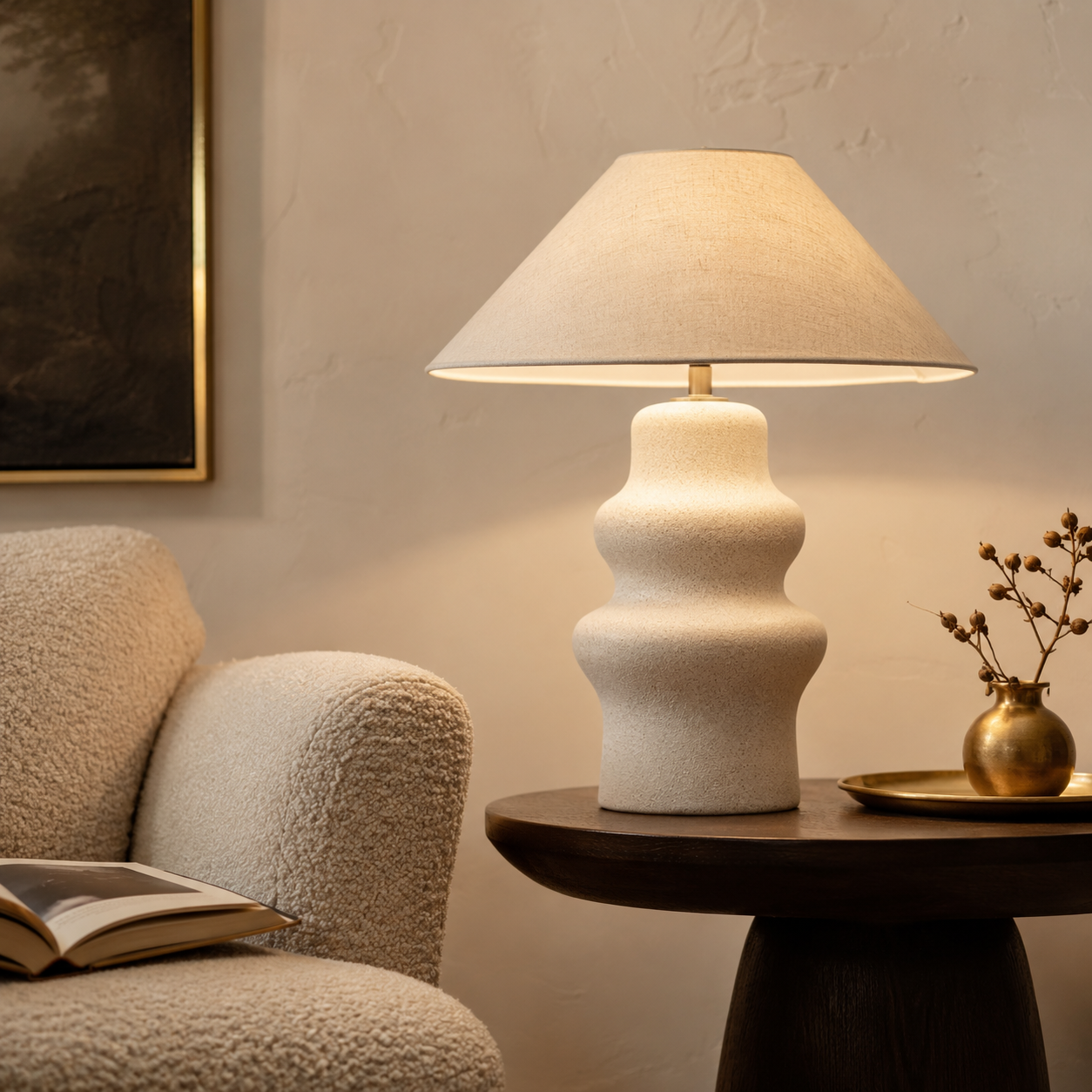
Accent lighting is the layer that makes a room feel designed rather than simply furnished. It is decorative and deliberate: a small lamp glowing on a bookshelf, a light washing over a textured wall, a warm pool of light on a console in the hallway. Accent light adds depth, draws attention to the things you love, and creates the contrast between light and shadow that gives a room its atmosphere.
This is also the most forgiving layer. Accent lights do not need to be bright in fact, they should not be. Their job is character, not visibility.
Bringing the Layers Together
A well layered room usually has at least three light sources at different heights: something high, something at mid level, and something low. In a living room, that might be a ceiling light dimmed low, a floor lamp beside the sofa, and a table lamp on a sideboard. In a bedroom, a soft overhead light, bedside lamps, and a small accent lamp on a chest of drawers.
Keep the colour temperature consistent across the layers warm white throughout a living space reads as intentional, while mixing warm and cool bulbs in the same room rarely does. Then control each layer separately, so the room can be bright for cleaning, focused for reading, and low and golden for the last hour of the evening.
Light Is the Finishing Layer of Every Room
You can change how a home feels without moving a single piece of furniture. Add a layer of light where a corner falls dark, swap a harsh bulb for a warm one, place a small lamp where the evening gathers. Layer by layer, the rooms you already have become the rooms you always wanted.