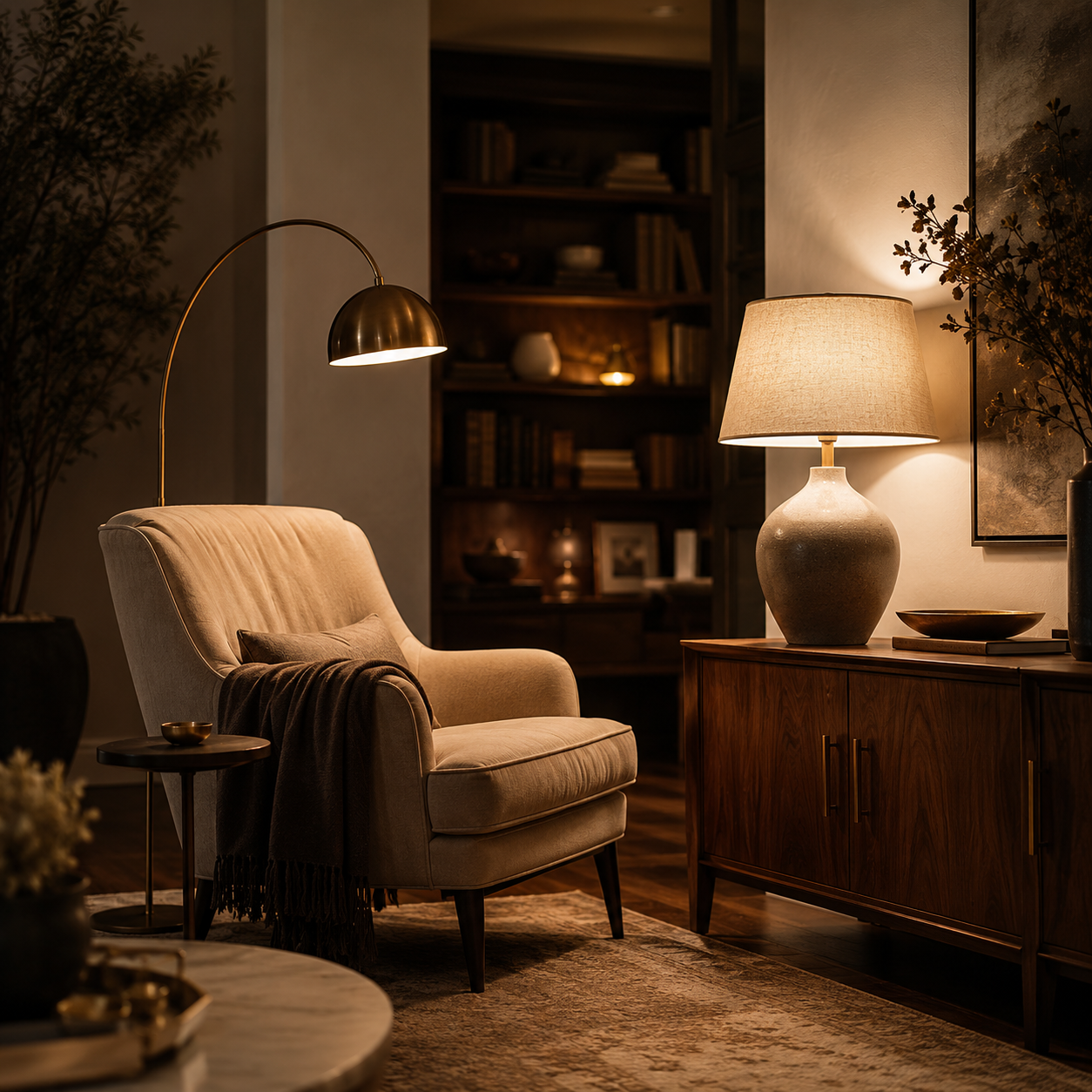

Article: Warm White vs Cool White Light Guide
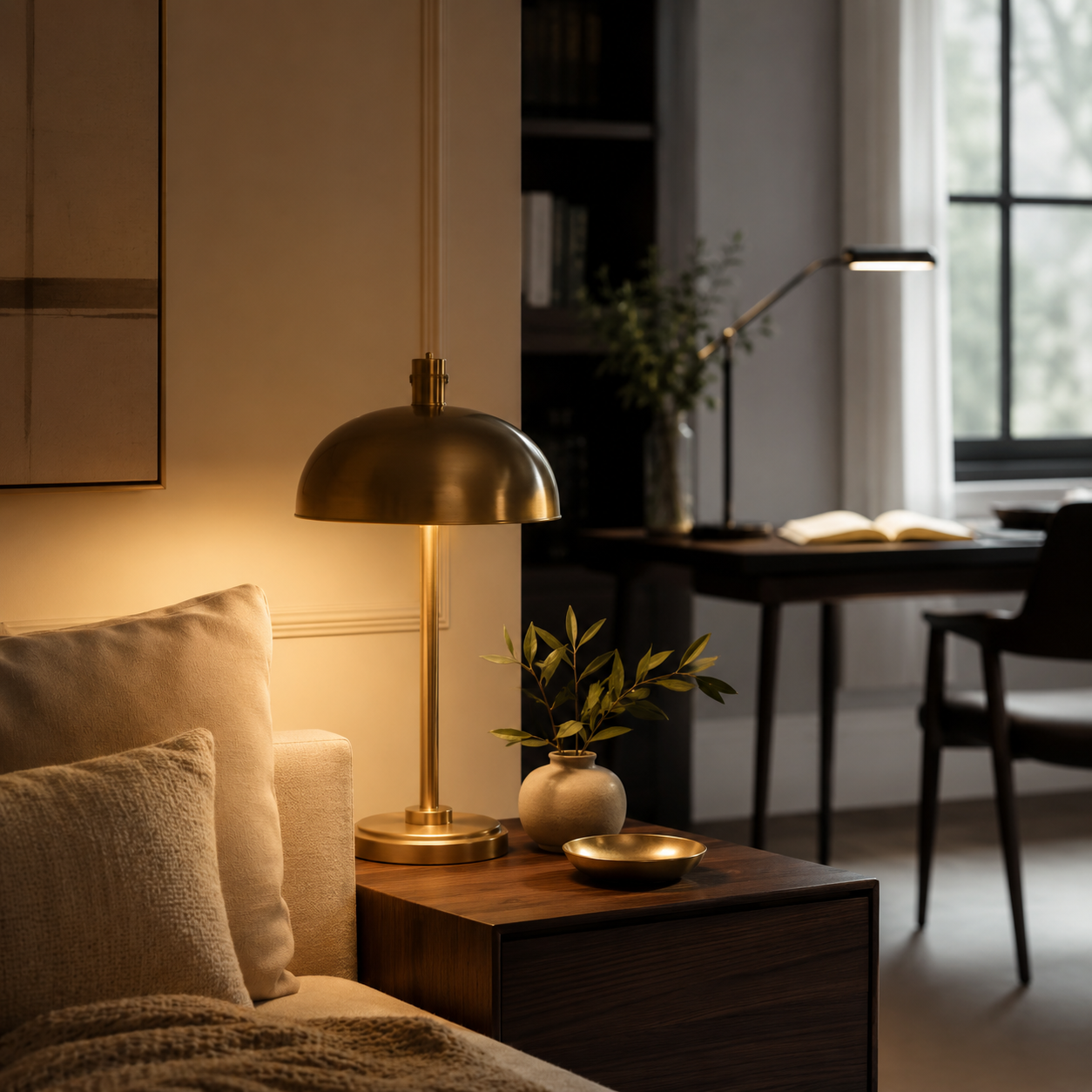
Warm White vs Cool White Light Guide
Two identical rooms, two identical lamps and yet one feels like a boutique hotel while the other feels like a waiting room. The difference is almost always the colour of the light. Warm white versus cool white is one of the most searched lighting questions for good reason: it is the single easiest change you can make to a room, and one of the most transformative. Here is what the numbers on the box actually mean, and how to choose with confidence.
What Colour Temperature Actually Means
Light colour is measured in Kelvin (K), and the scale runs the opposite way to instinct: lower numbers are warmer, higher numbers are cooler. Around 2700K, light has a soft golden quality, similar to traditional incandescent bulbs and candlelight. At 4000K, light turns neutral and crisp. Push towards 5000K and above, and it takes on the blue white clarity of midday daylight.
None of these is better than the others. Each does a different job the skill is matching the temperature to the room and the hour.
Where Warm White Belongs
Warm white, typically 2700K to 3000K, is the natural choice for the rooms where you rest. Living rooms, bedrooms, dining spaces and hallways all benefit from its softness. Warm light flatters skin, deepens the tones of wood and brass, and makes textiles look richer. It also signals to the body that the day is winding down, which is why the most restful homes glow gold in the evening rather than white.
If a lamp's purpose is atmosphere a bedside lamp, a table lamp on a sideboard, a floor lamp beside the sofa warm white is almost always the right answer.
Where Cool White Earns Its Place
Cool and neutral whites, from around 4000K upwards, excel where clarity and focus matter. Home offices, utility rooms, garages and task heavy kitchen zones all benefit from crisper light. Cooler temperatures increase contrast and make fine detail easier to see, which is why they suit desks and worktops.
The key is containment. Cool light is a tool, not an atmosphere — keep it to the surfaces where work happens, and let warmer light carry the rest of the room.
The Mixing Rule
The most common lighting mistake in British homes is mixing temperatures within a single room: a warm floor lamp in one corner, a cool white ceiling bulb overhead. The clash is subtle but the eye registers it immediately, and the room never quite settles. Choose one temperature per room and hold to it across every fixture. Where a room genuinely needs both a kitchen diner, for example separate them by zone, with cooler light over the work area and warmer light over the table.
Reading the Box Before You Buy
Every bulb sold in the UK lists its colour temperature on the packaging, usually alongside terms such as "warm white", "cool white" or "daylight". The wording varies between brands, so trust the Kelvin number rather than the label. For living spaces, look for 2700K. For neutral, versatile light, 3000K to 3500K. For workspaces, 4000K and above. Brightness is a separate measure lumens so a bulb can be warm and bright, or cool and soft.
Small Number, Big Difference
Few details in a home cost so little and change so much. Swap the bulbs in your living room lamps from cool to warm, and the entire space softens by evening. Give your desk lamp a crisper bulb, and afternoon work feels sharper. The furniture stays exactly where it was but the home feels newly finished.